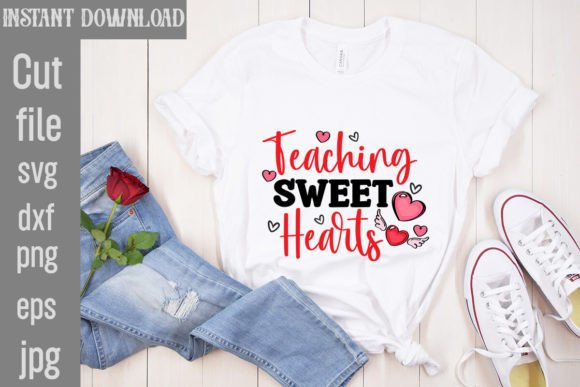
Teaching Sweet Hearts SVG Cut File Review
As a designer who spends more time than I care to admit staring at stitch density charts and testing thread tension, I approach every new digital asset with a mix of hope and skepticism. We all know the feeling: you find a design that looks perfect in the thumbnail, but when you actually digitize it or prepare it for production, the details get lost, or worse, the fabric puckers. Today, I’m putting Teaching Sweet Hearts SVG Cut File through its paces to see if it holds up in a real-world embroidery workflow. This isn’t just about whether the file opens correctly; it’s about whether this design can carry the weight of a finished product that customers will actually love.
First Impressions and Visual Personality
The moment you load Teaching Sweet Hearts SVG Cut File, the mood is immediately established. It strikes a balance between professional instruction and playful warmth. The visual personality is clean, making it an excellent candidate for apparel decorators and small business owners who want their handmade products to feel polished rather than amateurish. Unlike overly complex designs that rely on thousands of tiny stitches to create interest, this design relies on strong shapes and clear negative space. For an embroidery project, this is crucial. Simplicity often translates to higher perceived value because it demonstrates confidence in the execution.
From a graphic design perspective, the layout feels balanced. Whether you are planning a large chest print on a sweatshirt or a smaller accent on a tote bag, the proportions seem designed to sit comfortably without overwhelming the garment. The theme suggests versatility. It works beautifully for holiday embroidery collections, back-to-school merchandise, or even as a subtle nod to education in nursery decor. It doesn’t scream for attention; instead, it invites the viewer in, which is exactly what you want for brand consistency in a boutique setting.
Real-World Application: The Custom Tote Bag Scenario
To truly test a design like Teaching Sweet Hearts SVG Cut File, we need to look at how it performs on different substrates. Let’s imagine a specific scenario: preparing a custom embroidered tote bag for an Etsy seller’s shop. This is a high-volume item where margins matter, and presentation is everything. If the design is too dense, the fabric underneath becomes stiff and loses its drape. If it’s too sparse, it looks unfinished.
When applying this design to canvas or cotton canvas totes, the clean lines of the SVG cut file translate well into satin stitch outlines or fill stitch areas. The transparent PNG included in the download allows for easy placement on mockups before you even touch the machine. You can visualize how the heart motif interacts with the sturdy texture of the tote bag. It adds a soft, personal touch to what is otherwise a utilitarian item. Customers buying personalized gifts often look for that emotional connection, and a well-executed heart design provides exactly that. It transforms a simple bag into a keepsake.
Similarly, consider using this design for baby clothes. The softer aesthetic fits perfectly with the delicate nature of infant wear. However, here is where practical judgment comes in. On thin fabrics, you must be cautious. A design that looks great on heavy denim might pull apart fine jersey knits if not stabilized properly. The key is understanding that the visual appeal of Teaching Sweet Hearts SVG Cut File depends heavily on the foundation you build beneath it.
Technical Considerations for Embroidery Designers
While the graphic is sound, the transition from vector to stitched reality requires careful planning. Here are some critical notes for anyone integrating this into their craft business or commercial embroidery workflow.
- Stitch Density and Fabric Texture: Before committing to a full production run, test the design on scrap fabric first. Pay close attention to how the satin stitch handles the curves of the heart. If the fabric is highly textured, such as a boucle wool or a thick fleece, the fine details might get buried. In these cases, you may need to adjust the thread colors to ensure contrast against the background.
- Hoop Size Constraints: Always confirm hoop size limitations. If you are working with a multi-head machine for commercial embroidery, ensure the design fits within your standard hooping area without requiring awkward re-hooping. For hobbyists using single-needle machines, check if the design exceeds your machine’s maximum stitching width.
- Thread Color Contrast: The effectiveness of any embroidery file relies on color theory. Test it in black and white mockups to see if the shapes remain distinct without the aid of color. This is especially important for dark fabric. You might need to use a contrasting underlay or a stabilizer that matches the thread to prevent show-through.
- Small Details and Lettering: Inspect small details closely. If the design includes tiny text or intricate inner elements, remember that embroidery has physical limits. Threads have thickness. What looks like a solid line on screen might become a broken chain of stitches on fabric. If the details are too fine, consider simplifying them or increasing the scale of the final product.
Where to Use Carefully
There are certain applications where Teaching Sweet Hearts SVG Cut File should be used with caution. Avoid placing it on stretchy fabrics without a heavy-duty tear-away or cut-away stabilizer, as the tension of the stitches can distort the material. Curved surfaces, like caps or hats, present another challenge. The design needs to be adjusted for curvature, or it may look warped on the finished product. Additionally, if you are creating an embroidered patch that will be ironed or sewn onto frequently washed items, ensure the edges are fully enclosed with a tight satin stitch to prevent fraying over time.
Another area to watch is layered garments. If you are embroidering over pockets or seams, the added bulk from multiple layers of fabric and stabilizer can make the area uncomfortable. The goal is a finished product that feels as good as it looks. If the design creates a stiff, cardboard-like feel on the back of a t-shirt, customers may return it. Testing on the actual garment type is non-negotiable.
Value for Small Business Owners and Makers
For Etsy sellers and creative entrepreneurs, the right design assets can significantly boost buyer engagement. A design like Teaching Sweet Hearts SVG Cut File offers high giftability. It taps into universal themes of love and learning, making it suitable for Valentine’s Day, Teacher Appreciation Week, or graduation gifts. When you present these items with professional printable mockups, you signal quality and trustworthiness.
Furthermore, having versatile files—SVG for cutting vinyl accents, DXF for Silhouette users, and EPS for vector editing—means you can adapt the design across different mediums. You might combine the embroidered heart with a heat-transfer vinyl border on a sweatshirt, creating a mixed-media effect that stands out in a crowded marketplace. This flexibility increases the perceived value of your handmade product, allowing you to command higher prices while maintaining healthy profit margins.
Final Verdict
Ultimately, Teaching Sweet Hearts SVG Cut File is a solid addition to any designer’s library. It is practical, visually appealing, and adaptable to a wide range of embroidery projects. From custom apparel to personalized gifts, it delivers a professional finish when handled with technical care. Just remember to respect the mechanics of embroidery: stabilize properly, test thoroughly, and always prioritize the tactile experience of the wearer. If you do, this design will likely become a staple in your craft business toolkit.